

What Size Vivarium For 4-5in A Leopard Gecko
A vivarium for your leopard gecko is equivalent to the house, apartment, or condo yous are staying in – where y'all might exist lounging at right now while reading this article. Would you like to live in an 11-foursquare-human foot house like this ane in Berlin? Probably not for everyone.
The same consideration you have when choosing a home applies to your piffling friend. A smashing enclosure will be your little reptilian baby'due south house for many years to come, so it'southward essential to make sure they feel safe, comfy, and happy living in it!
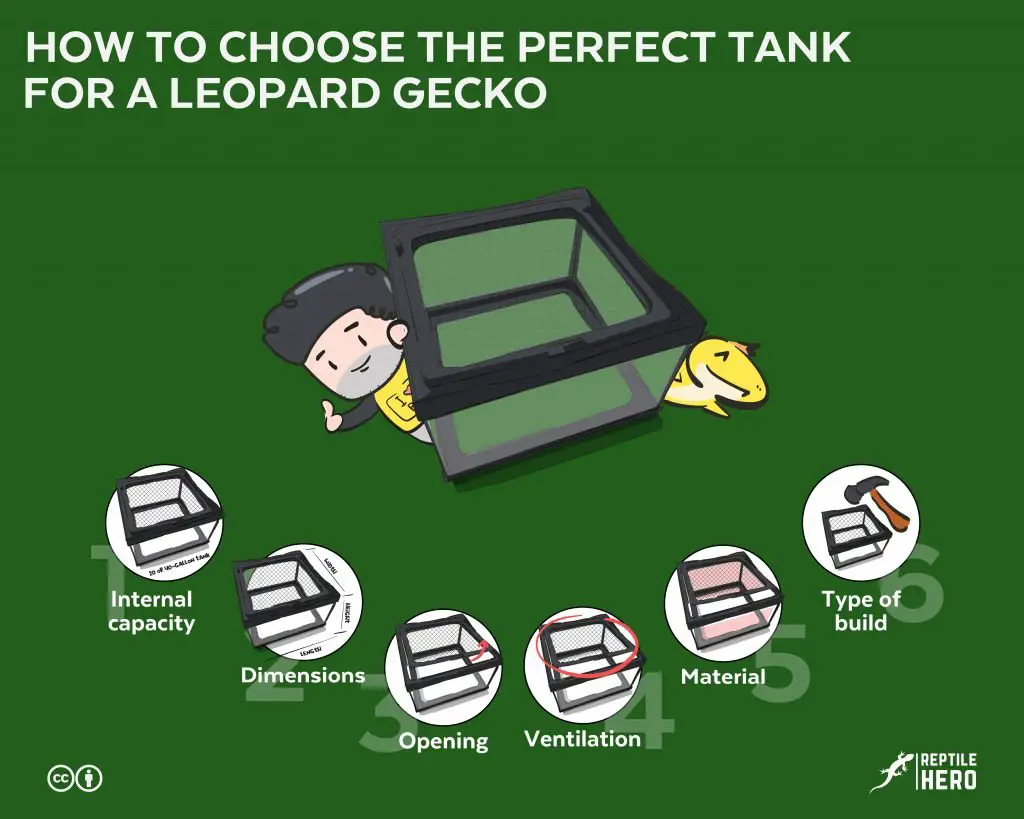
As a general rule, the following aspects need to be taken into consideration when choosing a tank for your leopard gecko:
- Internal Capacity
- Dimensions
- Opening
- Ventilation
- Textile
- Type of Build
Homing in on the perfect vivarium for your precious gecko? Make sure information technology meets these requirements first!
6 Things to Consider Before Housing a Leopard Gecko
In your stance, what makes a house a home? For me, it's a combination of many things which includes a fully equipped kitchen, big windows, a well-lit bedroom, and a spacious bathroom. But what makes a vivarium a home for our adorable geckos? Well, I'll discuss them with y'all in as much detail as I possibly can.
#1 – Internal Capacity
The average fully grown adult leopard gecko will thrive in a 40-gallon breeder or xl-gallon long tank. All the same, a twenty-gallon tank may also suffice for an adult leopard gecko.
When selecting the perfect vivarium for your soft-scaled precious lilliputian companion, the internal capacity is the first thing you should ever take into consideration. Others mistakenly believe that big spaces scare and stress leopard geckos merely that is more of a misconception than it is a fact.
A gecko'southward vivarium must take more than enough room to fit at least one of each provision:
- Humid hide
- Dry cool hide
- Dry warm hibernate
- Supplement bowl
- H2o bowl
- Food bowl
- Plants (existent and/or fake)
- Rock formation/insert
- Log/co-operative
Because the rapid development they undergo, the appropriate tank size for a single leopard gecko is highly dependent on what stage they currently are in life also as their size – their, snout-vent-length. Still, if you have limited complimentary space in your business firm, apartment, or room, you could gradually switch to bigger tanks instead.
For a hatchling leopard gecko, a 10-gallon tank would provide more than plenty room for it to grow. However, near vivarium decors, furnishings, and accessories are made for adults. So you would nearly likely need to create handmade provisions. Juvenile and adult leopard geckos should be individually housed in an enclosure that is a minimum of a 20-gallon long enclosure.
#2 – Dimension
A unmarried leopard gecko should be housed in a vivarium that is at to the lowest degree 12 inches (30 cm) tall and has 3 foursquare feet (0.28 square meters) of floor space. Virtually xx-gallon reptile vivariums that are 24 inches (threescore cm) in length, 18 inches (45 cm) in width, and 12 inches (30 cm) in height meet this minimum requirement.
Despite the fact that leopard geckos lack the gummy toe pads that enable arboreal lizards such as crested geckos to calibration walls, steep terrains, and walk upside-down along ceilings, they are still fantastic rock climbers. In fact, they accept actually small but sharp claws which enable them to dig deep into the footing or climb deep into caves and crevices in loftier areas.
Contrary to popular belief, leopard geckos should really be housed in generously sized tanks that both provide plenty caput and flooring space [one, 2]. Whether housed by itself or in a modest group, a leopard gecko must have enough room to burrow into the substrate, climb onto stone formations and branches, every bit well as explore.
To be quite frank though, all of us hither at Reptile Hero recommend much larger tanks at least 36 inches (90 cm) in length and 18 inches (45) in both width and height. By doing then, we can go for naturalistic or bioactive set-ups without taking abroad significant space for our geckos to roam around in. Nosotros also get the pick to place lights and heaters inside.
Needless to say, a vivarium that closely mimics their natural habitats volition raise the likelihood of your leopard gecko beingness active and forbid geckos from condign overweight or obese due to overfeeding and lack of exercise. Many other keepers can attest to this.
A big tank with a deep base of operations, aplenty surface expanse, high ceiling, plenty of hides, and sufficient foliage will encourage these terrestrial reptiles to move near and engage in regular exercise. Some people might recollect all of that is unnecessary since leopard geckos will survive in a small tank. However, surviving is entirely unlike from thriving. For your gecko to thrive, it should exhibit mutual behaviors displayed by its wild counterparts.
Moreover, a rectangular enclosure is preferred over cubed ones since the added length makes information technology easier for keepers to maintain an optimum thermal slope within the tank. This, in turn, allows for our common cold-blooded little critters to thermoregulate without much problems or difficulty.
#3 – Opening
Enclosures designed with a combination of forepart and top-opening access points are preferred for easier reptile keeping in terms of convenience for decorating, cleaning, feeding, and treatment.
When yous get-go researching for the perfect tank for leopard geckos, yous're sure to come up across different tanks with three main types of doors or openings: 1) top, 2) front, and 3) combo. Each gecko possessor, of form, has their own preferences. However, I want to discuss the pros and cons of each ane from a more objective point of view.
Top Opening
Most starter kits for terrestrial lizards like leopard gecko ordinarily include a glass tank that resembles the mutual aquarium. The simply difference is that the enclosures made especially for reptiles are equipped with a mesh hat made with plastic, wire, or both. This improver ensures that your leopard gecko doesn't escape and won't go suffocated. It'due south also easier to design and decorate when you take an aeriform perspective of your vivarium layout.
Top-opening vivariums are not recommended because:
- Having this as the just point of access can be stressful for leopard geckos as their natural predators in the wild would unremarkably swoop down from above.
- If you take ane that's only 10 or twenty gallons, you probably take the light, heaters, and other fixtures assail top of the lid. Having to move those before and after each time you cheque in on your gecko tin can be an incredibly troublesome vivarium with pinnacle openings products.
This is also the usual point of access for the plastic rack and tub systems onetime-school breeders utilise. I'm not a fan of this method for multiple reasons, one of them being the fact that y'all're basically subjecting your leopard gecko to mini earthquakes each time you close and open up their tank. (I will discuss this in greater detail later on in the commodity.)
Front Opening
Another type of entry point for reptile enclosures is forepart-opening ones. The front-opening type tin can further exist divided into ii styles: one) hinged and 2) sliding.
Functionally, they are pretty much identical, both styles work equally great. Pet parents or leopard geckos who have switched from top to front-opening vivariums, I and my team included, have observed pregnant differences in our picayune ones' behavior when we get in to pick them up. Since they can clearly see u.s.a. front the aforementioned level when nosotros approach them for handling, they are much less jumpy and scared. Even so, they do have pocket-sized differences.
Leopard gecko vivarium enclosures with hinged front doors usually make utilise of articulate plastic or glass materials and then frame the panels in wood, metal, plastic, or a mixture of all three. Equally such, these ordinarily come at a higher cost compared to top opening tanks of the same chapters and dimension. They may besides come with a simple or complicated locking mechanism which may or may not exist secured with a key.
Leopard gecko vivarium with swinging hinged doors should be avoided.
This is because the door continuously moves about unless yous personally hold it in identify. I've also heard of horror stories where keepers have inadvertently applied as well much force while trying to close such doors for it to slam into place and go cracks and chips. If you do experience this, immediately take it replaced and then cleaved pieces don't rain downwards your gecko's home.
Vivariums with sliding forepart doors use either completely transparent plastic or drinking glass every bit their main materials. If you lot take an incredibly fast and sneaky gecko that acts similar a protagonist from a heist movie, this would exist perfect for you considering y'all can arrange how open up you'd need the door to be. When offer live feeder insects that hop or crawl nigh, yous can open it just a crack so information technology doesn't escape either.
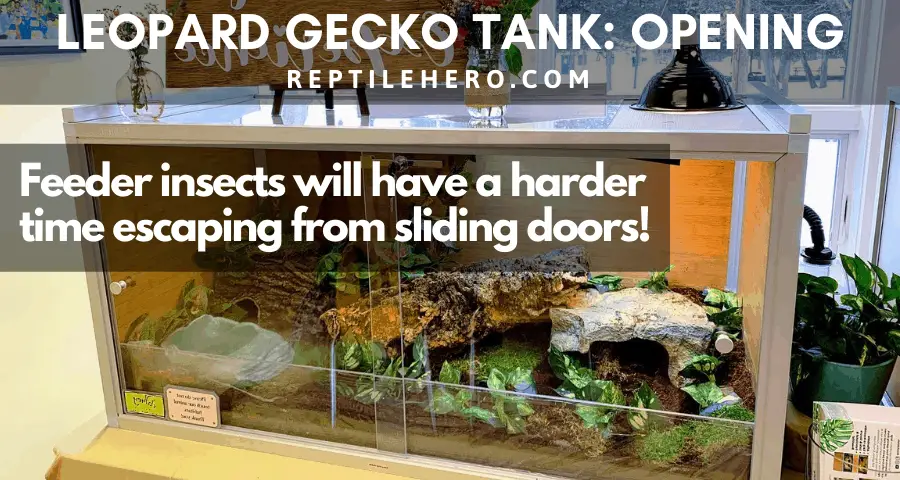
The downside is, substrate and feeders may get caught in betwixt the sliding doors and their tracks. But y'all can hands sweep that away then I don't really mind information technology when it does happen to me.
Tanks with sliding doors may or may non be built with a security mechanism, it varies among unlike manufacturers. It may likewise exist removable or permanently fixed into the unit. Personally, I especially beloved Zen Habitat's sliding door enclosures since they are removable for easier cleaning and they take metallic door wraps and a simple keyless locking feature.
Combo Opening
Tanks with a combination of top and front admission points have steadily grown a post-obit within the reptile-keeping community. The just catch is: it usually comes with a hefty price tag. Present, about well-known brands that create readily available enclosures offering models with this type of opening.
With vivariums that have front doors likewise as removable superlative screens, you become the best of both worlds. Like the aquarium-type tanks, yous accept an aerial view of your leopard gecko's whole housing. Another perk is that yous can drop sprightly alive feeder insects similar crickets from the acme and then they don't easily escape during feeding.
Because there is as well front door admission, you won't have to worry virtually scaring, or worse, dropping your cute lilliputian leopard gecko whenever you have to take it out of its home. This factor is incredibly important especially when you lot are withal trying to get a new gecko used to you and its new dwelling.
Plus, if you need to place a custom tank slice – say, a big fake rock mountain background complete with hides and caves – existence able to go into every nook and cranny of the vivarium from the front and top volition make measurements more accurate and designing much easier. The same goes for cleaning and maintenance as well, you won't miss a spot.
#4 – Ventilation
A vivarium for the average leopard gecko should have large air vents by the walls or a mesh height to promote ample airflow and aid in maintaining the proper level of humidity.
Leopard geckos originate from countries with semi-barren deserts, besides equally dry, rocky grasslands [3]. In such areas, their wild relatives are rarely out in the open, exposed to predators. To ensure their safety, they will seek shelter deep down into the soil (containing dirt and sand) or high upwards in gaps of rock mounds. Rarely will they exist completely closed off from the rest of the world.
Taking such facts into consideration, these magnificent animals will not practice well in a stuffy enclosure with constantly high humidity levels. Keep humidity levels within the thirty% to 40% range for leopard geckos [four]. Anything less or more than that volition crusade health problems such as retaining shed skin and bacterial infections.
Remember, despite making sure that everything you identify inside your gecko's vivarium is make clean and sterile, if you lot practise non exercise proper husbandry, mold and bacterial growth are inevitable. To prevent such problems, brand certain to accept a hygrometer (here on Amazon) to monitor the humidity level in the tank.
Additional ventilation holes should be drilled on the walls or roof of a leopard gecko's enclosure if humidity spikes higher than 40%. However, don't go out any hole as is. Cover them with slit-type vents of fine mesh Conversely, when humidity levels dip way below 30%, comprehend up some of the vents to heighten it.
Be ready to make adjustments whenever necessary.
#5 – Fabric
Wood is the best material to use for edifice a leopard gecko vivarium. In combination with a steel mesh peak and a clear glass or plastic front door, these materials will facilitate optimal humidity and temperature levels while keeping your gecko safety and secure.
Keep in heed that if y'all are staying in a place that experiences extremely hot summers, freezing winters, or really bad humidity, you will demand to consider what materials make upward the vivarium y'all are planning to procure.
Below are the four major categories of materials used for amalgam various types of housing for reptiles and amphibians.
Mesh
Though a leopard gecko will profoundly benefit from living in a vivarium built with a mesh top because information technology supplies sufficient ventilation, your soft-bellied friend should never exist housed in a vivarium that is entirely made of such fabric equally the risks would easily outweigh the benefits.
A 100% (or even just 90%) metal mesh enclosure is not recommended for leopard geckos. Outset of all, that would basically be an electrocution chamber and a major fire hazard [5]. Water , metallic, heat, and electricity won't mesh together well.
Furthermore, such a set-up won't allow for proper humidity and temperature command, and monitoring. Information technology's too open. Fifty-fifty if you only use metal mesh panels for the four walls of your gecko's business firm, no matter how fine the holes are, there is a high risk of injury.
If you do get a vivarium with a mesh cover, make sure that the steel has been galvanized and sterilized before structure. Why? Well, it can be potentially non galvanized metal materials that are potentially toxic to geckos and other reptiles [6]. I mean, just think of rusting from regular misting and humidity.
Even so, do keep in mind the metal will work great not but for ventilation screens merely for framing also. They volition increase the structural integrity of your enclosure. Lastly, metallic can be aptitude, shaped, and cut however you would like it to be if yous know the correct tools and methods to use.
Plastic
Now let's talk about 1 of the more debated materials used in building readily available and like shooting fish in a barrel-to-assemble vivariums in the hobby: plastic. They are durable in that they don't decompose or rot easily. A non-so-fun fact: your regular plastic shopping bag will take most 10,000 years to fully interruption downwardly [five]. Even so, this doesn't necessarily hateful that plastic products are indestructible.
In fact, multiple other reptile owners have had problems with cheaply made, mass-produced enclosures considering the plastic used in their structure melt and warp as well easily. Such a state of affairs would certainly exist frustrating for any keeper or breeder because the absence of a practiced low-cal and rut source could exist detrimental to a gecko's health. There have even been reports of plastic releasing fumes once subjected to high temperatures.
On the bright side though, some plastics have been created to withstand electricity, water, and chemical corrosion. They as well concord upwards well to heat and humidity. Plus, since they are lightweight, yous tin can hands move them around when necessary. Such plastics are the ones yous should look for in a vivarium.
Safe plastic materials for leopard gecko vivariums include:
- Polyvinyl chloride (PVC)
- Acrylonitrile butadiene styrene (ABS)
- Polypropylene (PP)
- Acrylic
However, I'thousand against the do of keeping leopard geckos and other exotic animals in the plastic rack and tub systems. These are non suitable for long-term housing equally they practice not allow for proper lighting, heating, ventilation, and enrichment. Even if you purchase those big storage bins, remember that they were never marketed every bit reptile enclosures for a reason.
Small plastic enclosures, similar this 1 on Amazon, are only bully options for temporary housing in the outcome that you would need to visit your local veterinarian, travel a far altitude, quarantine a sick or new gecko, or deep clean your big vivarium.
Drinking glass
The most commonly available types of reptile enclosures are ordinarily fabricated with drinking glass. But what exactly is sand? How is it made?
Drinking glass is the product of heating sand, silicon dioxide in particular, at a very high temperature of more or less 3,092°F (1,700°C) where it becomes a liquid substance. Once it cools down, it transforms into the articulate solid we are most familiar with [five].
What makes glass popular for making enclosures include its transparency, hardiness, and resistance to heat and h2o. It'southward perfect for holding in a steady amount of humidity. Placing decors and accessories within is also a like shooting fish in a barrel with suction cups and some silicone adhesive. It'due south perfect for bioactive gear up-ups since it can concur a lot of weight also. So glass enclosures usually sell at an expensive price point.
Nonetheless, glass should never be in direct contact with a heat source for a long period of fourth dimension as information technology will crack. Other drawbacks include its inability to retain heat. To combat this, many artistic keepers have decided to create insulating naturalistic backgrounds and inserts with spray foam, animal-safe sealant, and many other things. Here's a smashing case:
As you can meet, a fully decorated leopard gecko vivarium also serves as an attractive display in your habitation. Yous just have to be mindful of where you place it so the less appealing backside doesn't show.
At that place accept too been discussions on how the reflective nature of glass can be distressing for leopard geckos. Some have claimed that these little creatures are incapable of identifying their reflections and would therefore encounter themselves as possible threats. Hence, glass tanks would prove to be quite stressful housing environments.
Other reptile species have shown that this is indeed the case, chameleons would change color upon seeing their reflections [7]. But in a study wherein mirrors were used equally enrichment items [viii], leopard geckos showed little to no significant changes in beliefs upon seeing their reflections – be it social, defensive, or aggressive.
Wood
Enclosures fabricated primarily from woods have become increasingly pop with regular keepers, likewise equally professional breeders and exotic beast experts. However, since vivariums are harder to find, they commonly fetch a high toll.
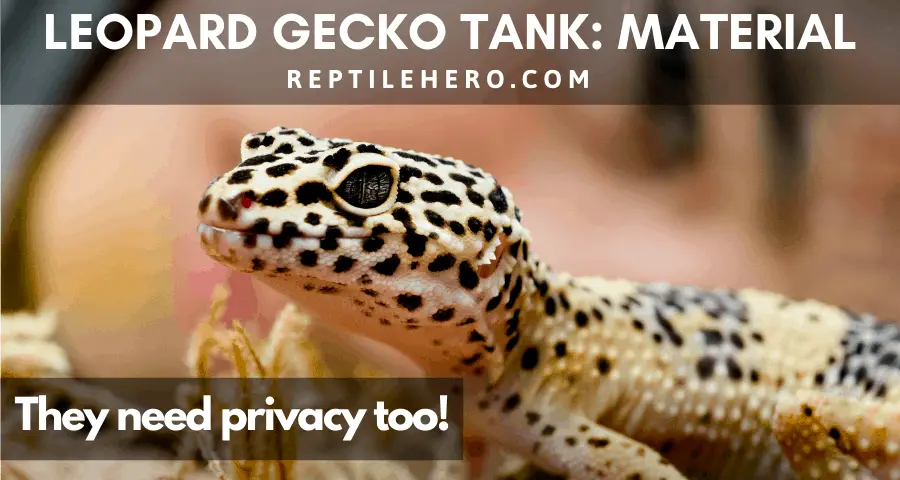
In previous sections of this article, I have lauded the convenience and advantages of having clear vivariums. Notwithstanding, every bit the years went by and I had more experience with keeping leopard geckos, I realized that glass enclosures piece of work better for my preference that it does for my pet's well-existence. Although a naturalistic articulate enclosure does make for a great conversation starter and display, information technology may really be stressful for geckos to be and then exposed.
Wooden vivariums from Zen Habitats are a slap-up solution for this as the sides and back provide more than plenty privacy and security while the transparent front end doors and mesh ceiling let for non-intrusive viewing.
Besides that, wood retains heat up to 10 times ameliorate than glass and provides great insulation from the cold [v]. So if you feel exceptionally chilly winters year after year, ditch your glass enclosure for wood ane. Just don't place it in an surface area that receives plenty of directly sunlight as it may act similar an oven and overheat [9].
Condom wood materials for leopard gecko vivariums include:
- Marine plywood
- Melamine
- Oak
- Magnolia
- Birch
- Oriented strand board (OSB)
I'1000 still on the fence every bit to whether cedar, pine, and other sap-heavy woods are actually safe for prolonged exposure to reptiles. Some claim that these are 100% toxic to not only reptiles but rodents besides. On the other hand, others contend that whatsoever wood is basically non-toxic as long every bit it has been properly kiln-dried, treated, and sealed.
Lastly, keep in mind that wood is odor and moisture-absorbent. Every bit a result, it may rot if not sealed and treated properly. However, since leopard geckos demand a drier environment compared to tropical species like cresties, this shouldn't pose much of a trouble.
#vi – Type of Build
I of the near important things beginner reptiles parents neglect to consider when planning to select the perfect domicile for their reptiles is the type of build. Even so, each type comes with its own advantages and disadvantages.
Certain types may better adjust very specific needs and living situations of certain people, while others may be great for everyone.
Do-It-Yourself
Nowadays, more and more than people have gone for the DIY route when it comes to creating the perfect dwelling house for the reptiles and amphibians in their care.
Pros of DIY vivariums:
- You can choice and cull the materials you want
- It costs a lot less when you do it yourself
- Options for customization is practically endless
Cons of DIY vivariums:
- Takes a lot of time to complete
- Materials can be difficult to procure
- A complete set up of tools and equipment are needed (if you do not have them the initial savings can exist easily first by the tools y'all might demand to buy).
- Y'all should have dedicated space for construction
Would I recommend this to everyone? The short answer is: no. Don't go me wrong, I'm all for doing things from scratch. Still, the reality is not everyone has the right tools and skills to pull off a functional and cute handmade vivarium.
Ready-Made
Most enclosures designed for leopard geckos that are readily available fall into this category. Prepare-fabricated tanks are nonetheless a reliable become-to option for nigh reptile owners.
Pros of ready-made vivariums:
- Easy to find in local shops and online
- Lots of styles and sizes available
- Damaged parts are usually replaceable
Cons of ready-made vivariums:
- Tin exist pricey in one case the delivery fee is included
- Could interruption during delivery
A considerable number of reptile enthusiasts go for gear up-made vivariums because they either come fully synthetic or in parts that are easy to put upward. It'southward too easier to choose the right brand since most manufacturers accept online shops with reviews you lot can go through yourself.
Custom-Built
Though a lot of people have started keeping reptiles, not everyone has the fourth dimension, talent, tools, and infinite to construct a completely customized enclosure for reptiles. Because of this, getting in impact with experienced reptile enclosure builders is a nifty selection. Yous get the pros of DIY and fix-made vivariums by having yours custom-built by experts.
Pros of custom-built vivariums:
- Have it designed as you wish
- All-time quality possible
- Eliminate stress and effort needed
- Yous will get expert advice from professionals
- 100% personalized to suit your needs and wants
- In example something breaks y'all know how to repair it straight abroad
Cons of custom-built vivariums:
- It may be expensive due to labor costs
- Could have a long time to complete
At present, this type of build I would recommend for keepers from all walks of life and varying levels of expertise. Yous may just need to save up more coin. Then again, some of the cheap and poorly built gear up-fabricated tanks sell for exorbitant prices.
To Splurge Or Non To Splurge?
Like I have already mentioned again and again in the previous sections of this article, going for the more than affordable alternatives or solutions doesn't ever stop upwards with the greatest issue. Certain y'all might save some money by choosing the least expensive products and materials bachelor in the beginning.
However, as time goes on, you might face up problems with your vivariums again and once again (e.one thousand., replacing parts, frequent upgrades) that would prove to exist more than costly and stress-inducing in the long run.
Personally, I think the best way to go near things in life – that includes proper reptile keeping – is to search for the all-time possible option even if it is pricier than y'all initially anticipated. If you don't have enough money, then save up for the all-time vivarium instead of getting the cheapest product of unknown quality and reputation.
I mean come on, no i is going to turn down a good deal. Only in that location is probably a large and crucial reason why that inexpensive vivarium or mysterious origin isn't selling. Good pet parents will only go for the cheapest products if they accept been tried, tested, and proven safe for our reptile babies.
What To Do With Your Old and Minor Enclosure?
It'southward common for virtually new reptile keepers to begin their journeying using the small tanks that usually come up with a complete starter kit. This isn't bad per se since going from the more than modest ready-up and so gradually scaling upwardly to more advanced and cocked fix-ups every bit time goes on provides a great learning experience.
But what is a keeper to do with those tiny tanks that their niggling dinosaur-like friends quickly outgrew?
Hither are three things yous can do to deal with sometime and small enclosures.
Go along
If you but accept 1 or two of these small tanks, you should go along them. They make for great temporary and quarantine enclosures. You could also up-bike it into a storage unit or anything of the similar.
Give
If you lot have amassed a number of pocket-sized tanks which your little dinosaur babies have outgrown, requite them away. You tin donate it to rescue shelters or clinics. But if you're strapped for greenbacks, you also have the option to sell information technology to other keepers. Get with whichever would be groovy for y'all.
Throw
If there are major damages that tin can no longer be repaired, or if information technology would cost you more money to do repairs than it would to purchase a brand new one of the same size, trash it. Just make certain to throw it away properly.
For example, if you live in New York and you have to dispose of your broken glass vivarium by covering it up in sheets of erstwhile newspaper, storing it in a cardboard box, and and then labeling information technology with "broken glass" to avoid injuries [10].
Takeaways
A tank should at least accept a 20-gallon capacity to house 1 adult leopard gecko. Almost 20-gallon reptile enclosures are 24 inches (sixty cm) in length, 18 inches (45 cm) in width, and 12 inches (thirty cm) in height.
Vivariums with only top access points are not recommended. Models with front or combo (top and front) are recommended considering they are safer and more user-friendly for reptile-keeping. Leopard geckos are native to dry regions with low levels of humidity (30-40%). Every bit such, its tank should accept air vents, a mesh ceiling, or both.
The best textile to apply for building a leopard gecko's vivarium base is kiln-stale, sealed wood. A steel mesh top and a clear glass or plastic front end door will facilitate optimal ventilation, humidity, temperature, and visual security.
Y'all can build your own vivarium, buy a mass-produced model, or take your leopard gecko'due south tank custom-made by an experienced professional. Each type of build has its ain pros and cons then choose the i which fits your situation best.
Sources
[one] https://canobievet.com/wp-content/uploads/2018/02/Leopard-Gecko-Care.pdf
[two] https://www.rvc.air conditioning.uk/Media/Default/pocket-size-animal/documents/Leopard-gecko-intendance-sheet-1.pdf
[3] https://en.wikipedia.org/wiki/Common_leopard_gecko
[4] https://www.rspca.org.united kingdom of great britain and northern ireland/documents/1494939/0/Leopard+Gecko+Care+Sheet+%28PDF+379KB%29.pdf/14188c25-57f7-feab-d801-a9dfddc7cb93?t=1556101270505
[5] https://letstalkscience.ca/educational-resources/backgrounders/types-materials
[6] https://www.americanhumane.org/app/uploads/2016/08/op-guide-reptilecare.pdf
[7] http://vlm.ub.ac.id/pluginfile.php/44867/mod_resource/content/one/Behavior%20of%20Exotic%20Pets%20Tugas.pdf
[8] https://www.sciencedirect.com/scientific discipline/article/abs/pii/S0168159116302350
[9] https://www.whitehousevethospital.com/storage/app/media/exotic_care_sheets/leopard-gecko-care-sheet.pdf
[10] https://portal.311.nyc.gov/article/?kanumber=KA-02086#:~:text=When%20throwing%20out%20broken%20glass,a%20trash%20can%20or%20bag


What Size Vivarium For 4-5in A Leopard Gecko,
Source: https://www.reptilehero.com/how-to-choose-tank-for-leopard-gecko/
Posted by: bryantwarajected.blogspot.com
0 Response to "What Size Vivarium For 4-5in A Leopard Gecko"
Post a Comment